JI Proprietary Putty Patterns

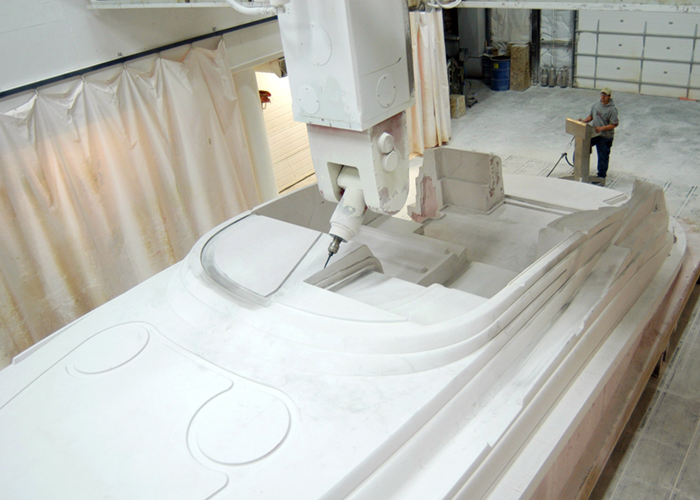
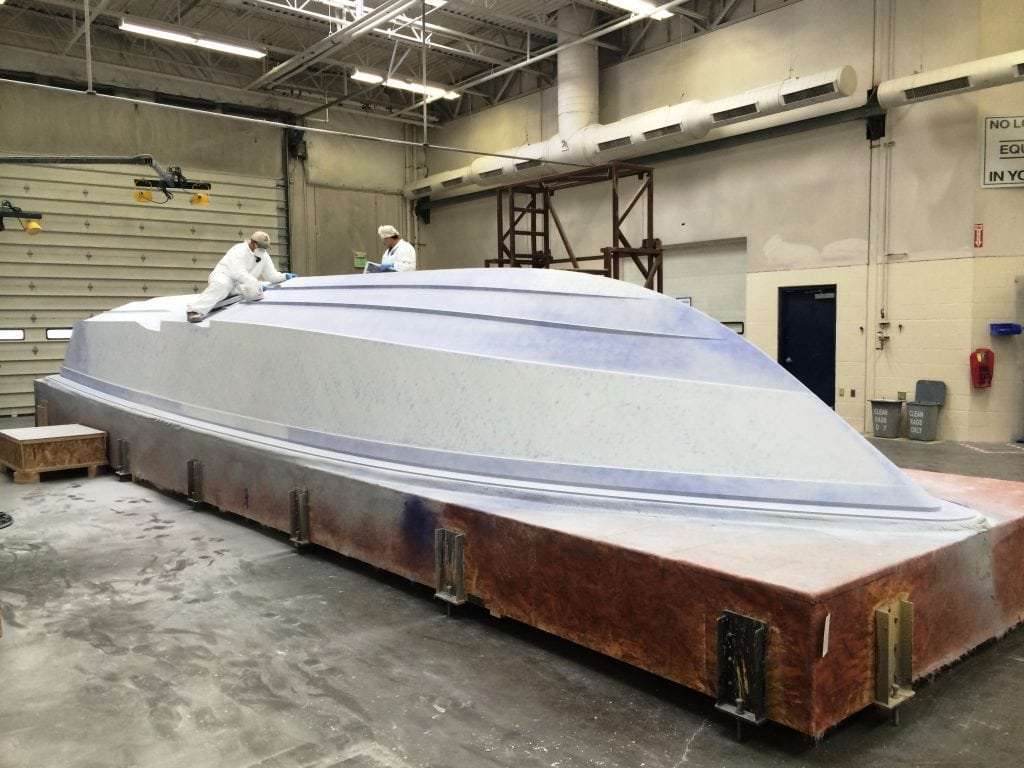
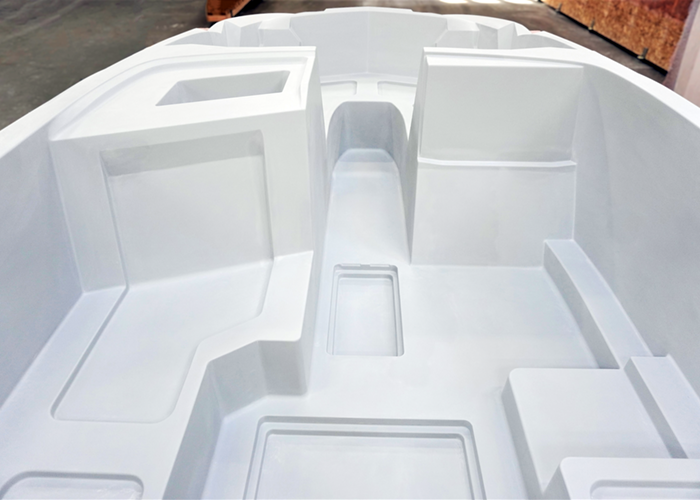
- Strong wooden substructure, foam, fiberglass and in-house engineered putty
- Machined to specific tolerances
- Extremely accurate and very fast turn-around at an economical cost
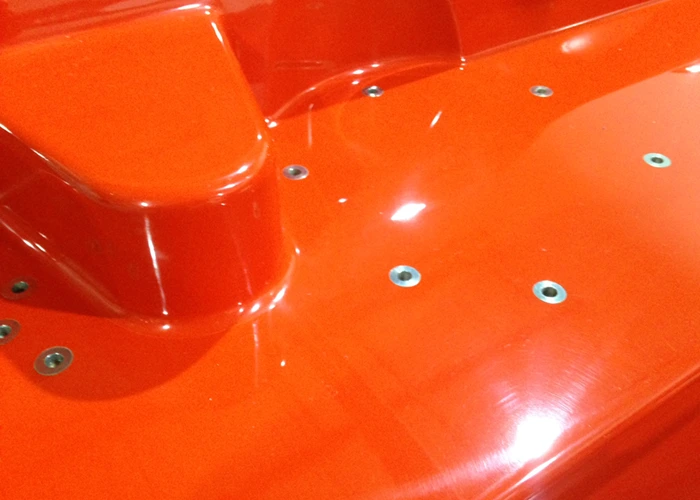
- Easy-to-sand surface can be finished to 80 grit or given a machined primer surface and sanded to a finer finish.
- Male or female shapes are available depending on application and geometry provided.
- Designed for room temperature applications, but can be modified to withstand temperatures up to 180ºF
- Primer surface option available
- Laser tracking and vacuum integrity options available
Block Foam Patterns & Wood Patterns
- Machined pattern fabricated out of block foam, MDF or modeling board.
- Block foam allows for the maintenance of higher tolerances and can reach higher curing temperatures than the JI proprietary putty patterns
- Medium Density Fiberboard (MDF) wood is stable at higher temperatures than putty, however the surface finish may be rougher.
- MDF is also a suitable material for casting patterns.
- Foam patterns can also be provided with a primer finish.
- A wide variety of foam materials and densities are available depending on your application.
Short Run Molds
Using JI’s putty material system, we make short run molds for one-off or short-production production runs. By shipping in segments and assembling onto a steel frame, there is virtually no limit to the size of the part.
Cold Molded Tooling
- Cold Molded Tools start with a rigid steel reinforced space frame as the base.
- Wooden station frames are attached to the frame to form the basic shape.
- Wooden battens are planked between the wooden station frames.
- Thin sheets of plywood are molded over the wooden battens to create a wooden face-sheet.
- A Fiber Reinforced Plastic (FRP) vacuum barrier layer is then applied to the wooden face-sheet.
- JI proprietary putty medium is sprayed onto the FRP layer before machining surface to the final net contour.
- Surface finished to the customer specified requirement.
- Verified for both vacuum integrity and surface contour conformity.
- Can be built in multiple sections and installed at the customer's facility allowing you an unlimited range of sizes for your tooling application.
- Very accurate and stable; can be used for multiple mold prints with minimal maintenance and repair between cycles.
Fiber Reinforced Plastic Tools
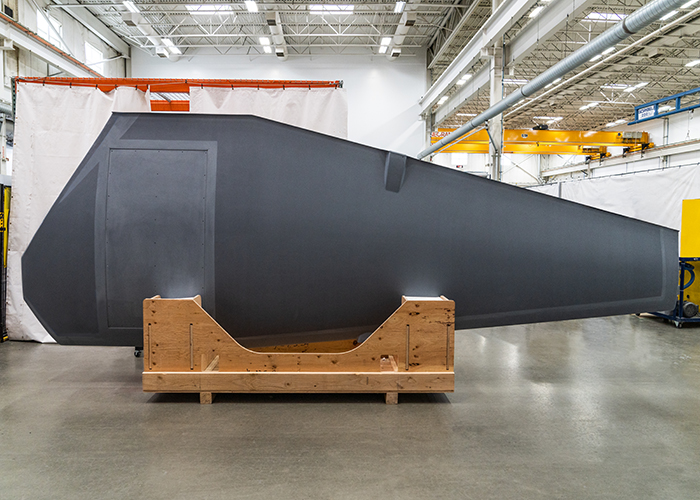
Molded from machined patterns; built to customer specifications. Composite consists of varying thickness fiberglass layers, a rigid balsa or foam core, and a durable tooling gel-coat finish. We have engineered FRP mold systems up to 220 feet in length.
250° Composite Tools
Carbon fiber or fiberglass composite tools, surface finishes optional depending on customer needs.
Cast 250° Tool
Also referred to as molded or transfer tools

- Infused on a highly accurate machined pattern
- Use Temperature: 250° F
- Tolerances: up to ± .010"
- Support: Steel tubing or composite egg-crate
Machined 250° Tool

- Machined tools provide higher accuracies than cast
- Includes laser tracking reports and vacuum verification
- Use Temperature: 250° F (modifications can provide a 300° use temperature)
- Tolerances: ± .005" - .015"
- Support: Steel or composite egg-crate
350° Composite Tools
Our 350° tools are a carbon fiber or fiberglass tool infused with an epoxy resin formulated to customer specifications. These 350° tools are available in two variations: cast and machined. Machined tools allow for the maintenance of higher accuracies. These 350° tools are provided with laser tracking and vacuum verification is performed to ensure conformity.
Cast 350° Tool
Cast 350° tools are infused on a highly accurate machined pattern and produce an accurate tool with optional surface finishes.

- Use Temperature: 350° F
- Tolerances: up to ± .010"
- Support: Composite egg-crate
Machined 350° Tool
Machined 350° tools are infused on a pattern and machined on its support structure with our 5-axis mills.

- Surface is extremely accurate and finished to exact specifications
- Use Temperature: 350° F
- Tolerances: ± .005" - .015"
- Finish: Machined; 32 rms typical
- Support: Steel or Composite egg-crate
Metal Tools
Metal tools are formed from billets or plates, using brake or bump forming techniques, then machined.
- Invar, steel or aluminum to meet your specific requirements
- Large tools are formed in sections, then seam welded to generate vacuum-tight tools
- Metallic tools provide high durability, enabling large production runs
- State-of-the-art accuracy and inspection metrology
- Tolerances ±0.002” - .015” – depending on size
- Support: Invar, steel or aluminum to match the part CTE