


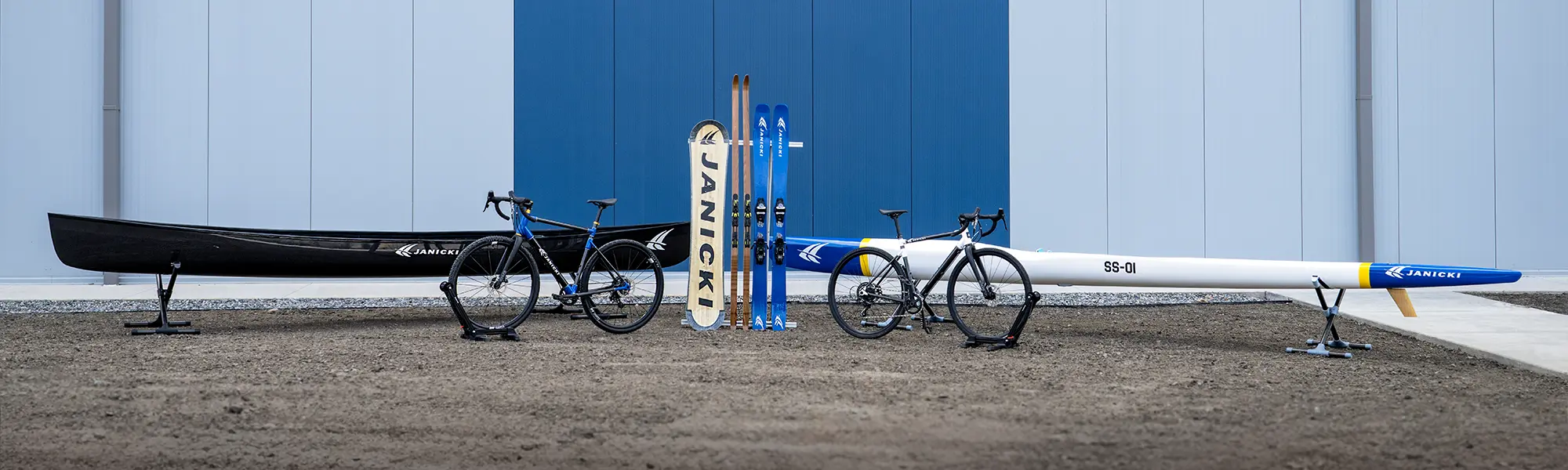
Ski to Sea is an annual multi-sport relay race that has taken place in Whatcom County for more than 50 years. Starting on the slopes of Mount Baker and ending in Bellingham Bay, the race consists of seven events including cross country skiing, downhill skiing or snowboarding, running, road biking, canoeing, cyclocross and kayaking. Janicki has been a longtime supporter of this race and sponsors teams of employees to compete annually.
In an effort to combine research and development projects with products employees can use and enjoy in the race, Janicki designed and manufactured equipment for a team to compete on. Each piece was built to the same standards applied to aerospace programs, showcasing the company’s technical capabilities in a fun, employee-focused format.
The construction of most sporting goods is much like the products made by Janicki. Metal, wood, composite and plastic come together to create these pieces of equipment. Team members at Janicki have used the shape and function of each piece to demonstrate or improve upon manufacturing capabilities that otherwise may not be known to the public.
Together, these pieces of equipment represent the past, present and future of manufacturing techniques in the aerospace and composites industries. Janicki is proud to showcase these in an event focused on the community where we work and live.
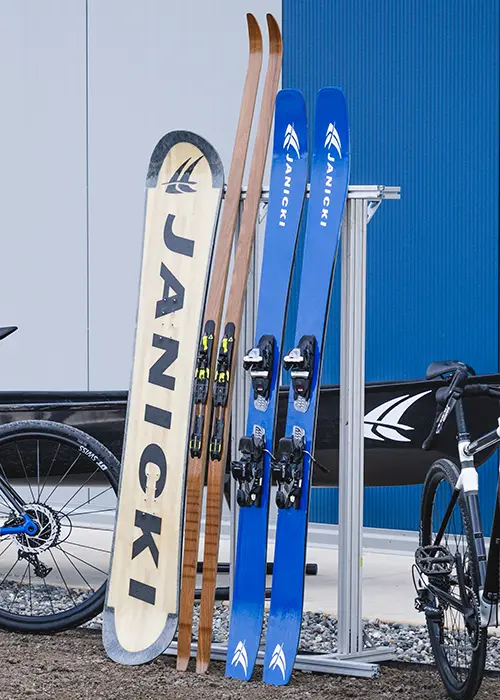 Cross Country Skis
Traditional cross-country skis can be made from wood, fiberglass or carbon fiber. Our skis take a hybrid approach, combining wood veneer and carbon fiber prepreg co-cured together in an autoclave. The goal was to match the stiffness of a conventional all-composite ski while substituting wood for polymer plies to reduce the environmental footprint of the finished part.
The ply schedule was developed through a combination of engineering analysis and physical testing. Using this technique, ski construction can be easily tailored to the skier’s height, weight and performance preferences.
Our cross country skis represent real-world applications for architectural industry composites and low temperature tooling.
Downhill Snowboard
Originally built by a Janicki intern using a wet-lamination process, the snowboard features a poplar wood core wrapped in fiberglass and epoxy resin. The mold was made from stacked plywood profiles cut on a CNC router, a low-cost and sustainable alternative to conventional tooling materials. The project demonstrated that quality composite parts can be produced with simpler, more affordable equipment than aerospace manufacturing typically requires.
Downhill Skis
Most skis are made in a similar process to snowboards. Instead of a wet layup, the Janicki skis were laminated with an out-of-autoclave fiberglass prepreg over a wood core.
The mold was machined from epoxy tooling board on a CNC router. Multiple sets were produced to dial in the ply schedule and hit the target stiffness, validating an out-of-autoclave process that keeps costs and equipment requirements low.
The result was a set of skis that are extremely lightweight and easy to ride.
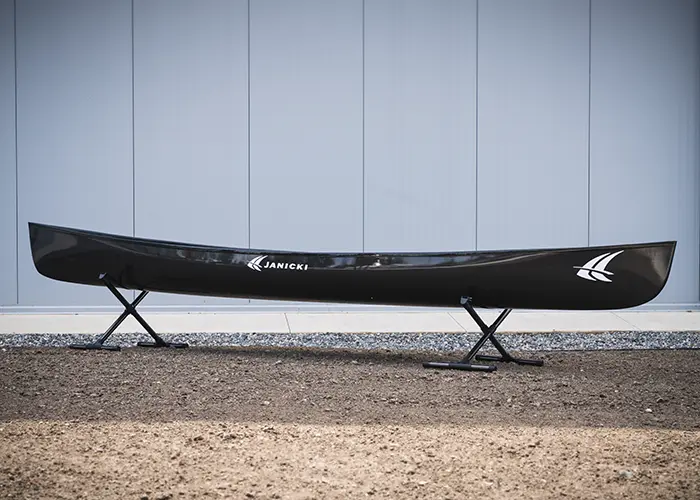 Canoe
Canoe
This lightweight carbon fiber canoe was built as a three-in-one development project, simultaneously testing two new tooling technologies and a manufacturing process applicable to unmanned aircraft structures.
The first-generation canoe was part of a research project used to demonstrate more environmentally friendly manufacturing processes by substituting urethane spray foam with bio-based materials like cardboard and wood fibers. The canoe was made using a high-performance aerospace carbon fiber prepreg and went on to be used in three previous Ski to Sea races.
The second-generation canoe is the newest and most innovative piece in the fleet. The mold was used to test two new tooling products for Janicki that will dramatically improve both cost and schedule for aerospace tooling. The boat utilizes the newest materials and manufacturing techniques for lightweight unmanned aircraft.
Hull plies were hand-laid over a foam core, with stiffeners and seat supports bonded in after cure. The canoe served as the test vehicle for an experimental low-cost medium-temperature pattern tool and a high-temperature bismaleimide (BMI) carbon tool designed for extended cycle life. Lessons learned from the tooling development are feeding directly into the next generation of Janicki tooling products.
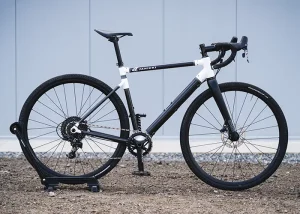 Road Bike and Cyclocross Bike
The bike frames demonstrate the full range of Janicki’s manufacturing capabilities in a single assembly. Carbon fiber tubes were bladder-molded in two-part female tooling, while the aluminum lugs connecting them were 5-axis machined in Janicki’s shop and finished to aerospace paint standards. The tubes and lugs were then structurally bonded together. The result is a multi-material assembly that reflects the same standards Janicki applies to production aerospace deliverables.
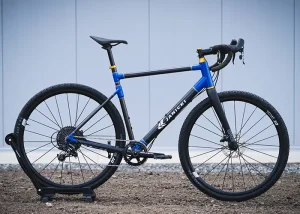
The first frame constructed was used as a process demonstrator to evaluate manufacturing techniques not currently performed at Janicki. 3D printed titanium and Inconel nodes, bladder-molded thermoplastic tubes, compression-molded nodes and other novel techniques were all showcased in what has affectionately been named the “Frankenbike.”
The race frames that followed were made using materials and methods Janicki actively uses to build airplanes. 5-axis machined aluminum lugs are bonded to carbon fiber and epoxy tubes with aerospace-grade adhesive and coated with aircraft primer and paint. The result is a set of stylish, lightweight frames that can be outfitted for either road biking or cyclocross.
Surfski Kayak
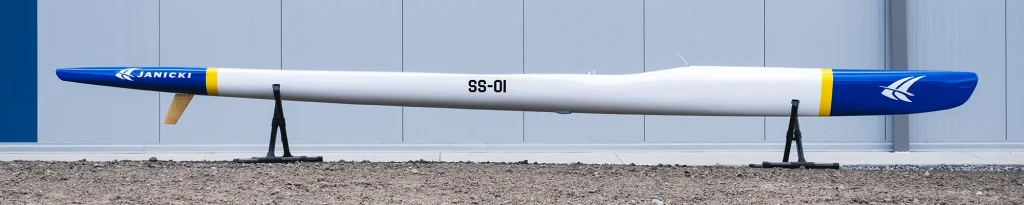
This 20-foot racing kayak was built to validate a new low-cost tooling approach capable of curing out-of-autoclave prepreg at higher temperatures than standard pattern tooling supports. Improving upon Janicki’s low-cost putty tooling technologies, the performance of the tool was improved by substituting some materials for those with better temperature resistance.
Upper and lower hull halves were laid up in fiberglass prepreg over foam core and oven-cured, then joined and finished in Janicki’s paint booth. The materials used in the boat’s construction are the same used in the fabrication of cutting-edge unmanned sailboats, including fiberglass prepreg, foam core, marine-grade paint and a 3D printed rudder. Hull materials were repurposed from a marine production project.
Race Results
Check back after May 24 for race results and a recap from the Made by Janicki team.