

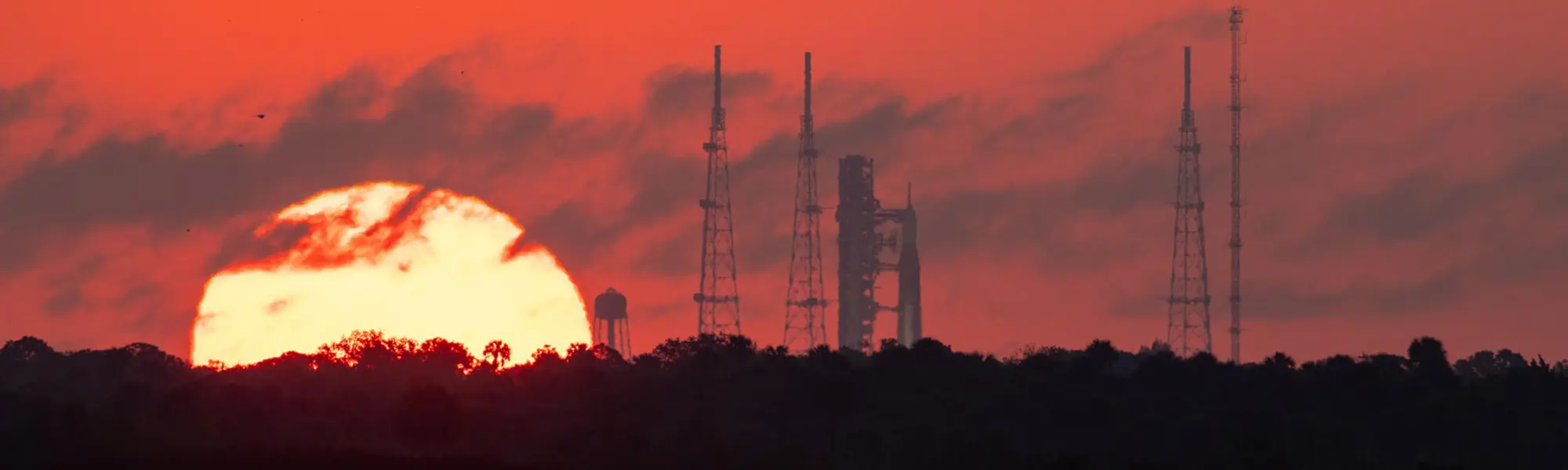
Featured image: NASA’s Artemis II SLS rocket at Launch Complex 39B, Kennedy Space Center, Florida. Credit: NASA/Ben Smegelsky.
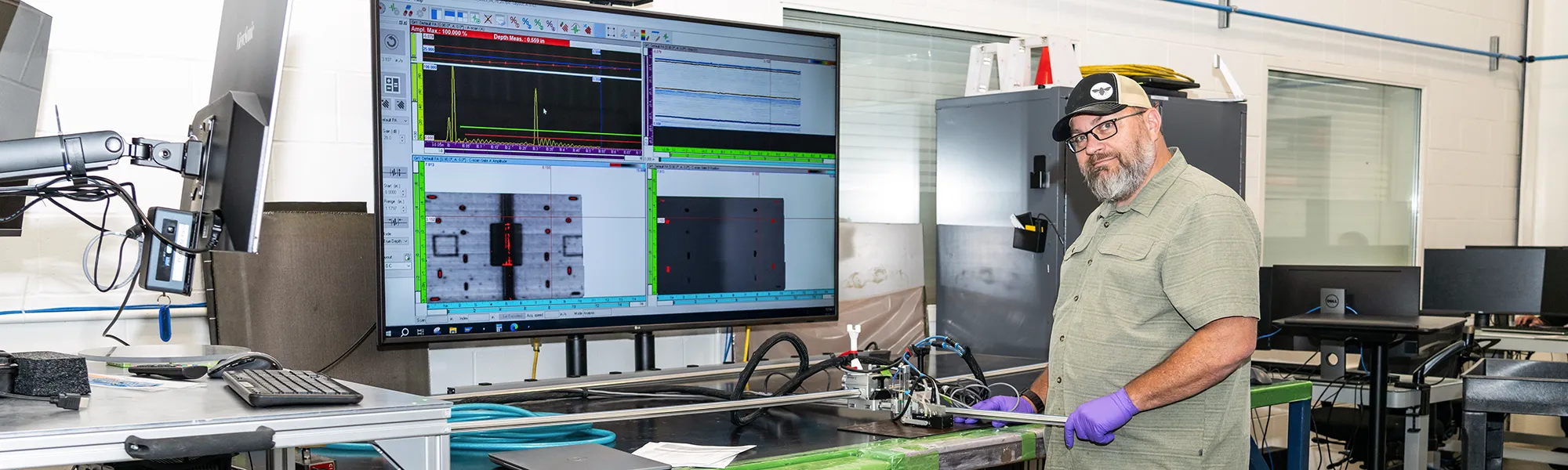
Janicki supplied tooling and parts in support of NASA’s Artemis program, contributing to the manufacturing infrastructure behind the SLS rocket and Orion spacecraft.
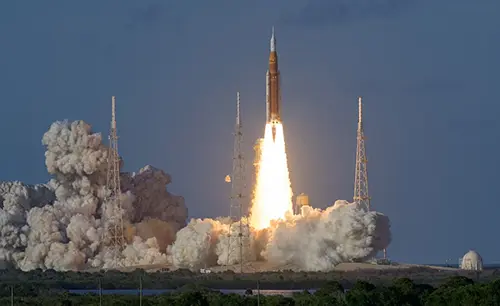
The SLS (Space Launch System) launches with the Artemis II crew aboard the Orion spacecraft on April 1, 2026, at NASA’s Kennedy Space Center in Florida.
Credit: NASA/Bill Ingalls
On April 1, 2026, NASA’s Artemis II mission launched from Kennedy Space Center at 6:35 PM EDT. Ten days later, on April 10 at 5:07 PM PDT, the crew splashed down safely in the Pacific Ocean off the coast of San Diego, completing one of the most historic missions in the history of human spaceflight.
The four-person crew traveled a total of 695,081 miles from launch to splashdown. On April 6, they broke the Apollo 13 record set in 1970, reaching a maximum distance of 252,757 miles from Earth, farther than any humans have ever traveled. They became the first people since 1972 to see the far side of the Moon with their own eyes, photographing 30 lunar surface targets to support future mission planning. The crew also witnessed a total solar eclipse from behind the Moon, a view no human had ever seen before.
Artemis II was the first crewed flight of NASA’s Space Launch System (SLS) rocket and Orion spacecraft, validating the systems and hardware needed for future lunar surface missions. The next mission, Artemis III, will conduct further technology demonstrations in Earth orbit. Artemis IV, planned for 2028, will land two astronauts near the Moon’s south pole.
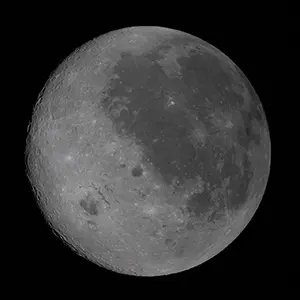
In this fully illuminated view of the Moon, the near side (the hemisphere we see from Earth), is visible on the right. It is identifiable by the dark splotches that cover its surface. These are ancient lava flows from a time early in the Moon’s history when it was volcanically active. The large crater west of the lava flows is Orientale basin, a nearly 600-mile-wide crater that straddles the Moon’s near and far sides. Orientale’s left half is not visible from Earth, but in this image we have a full view of the crater. Everything to the left of the crater is the far side, the hemisphere we don’t get to see from Earth because the Moon rotates on its axis at the same rate that it orbits round us.
Image Credit: NASA
The Mission
NASA‘s Artemis II mission is the first crewed mission to the Moon in more than 50 years. Artemis II builds on the uncrewed Artemis I test flight in 2022 and was the first time humans have flown aboard NASA’s Space Launch System (SLS) rocket and Orion spacecraft.
Commander Reid Wiseman, Pilot Victor Glover, and Mission Specialists Christina Koch and Jeremy Hansen of the Canadian Space Agency made up the four-person crew. After liftoff, the crew spent the first day in Earth orbit testing Orion’s life support systems before a translunar injection burn on April 2 set them on course for the Moon. On April 6, they conducted a seven-hour lunar flyby, passing as close as 4,067 miles from the lunar surface before using the Moon’s gravity to slingshot back toward Earth. After nine days in space, the crew re-entered Earth’s atmosphere at approximately 25,000 mph before a series of parachutes slowed Orion to a safe splashdown.
Recovery crews aboard the USS John P. Murtha retrieved the crew from the Pacific Ocean.
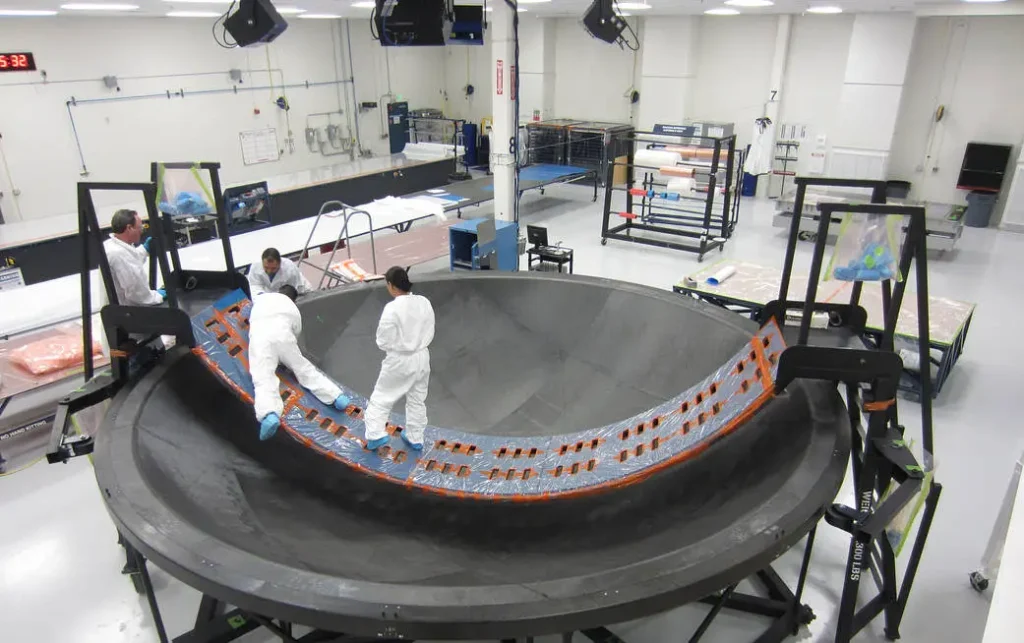
Janicki technicians position the layers of the diaphragm for the Orion stage adapter.
Janicki’s Role
Janicki has supplied tooling and parts in support of the Artemis program and its predecessor missions. Our work with NASA goes back several years, including manufacturing the composite diaphragm for the Orion stage adapter, which serves as a critical barrier between propellant gases and the crew compartment during launch. That work is covered in detail by Aerospace America and documented by NASA. Janicki also developed composite tooling for the SLS payload fairing, as covered by CompositesWorld. As one of more than 3,800 suppliers across the country who contributed to the manufacturing infrastructure behind this program, we are proud to have played a part in this mission.